

Melanoma cancer
While skin cancer is the most common type of cancer in the US, melanoma only accounts for 1% of them. Despite low prevalence, melanoma is the most severe type of skin cancer as it can more rapidly metastasize, or spread, to other parts of the body.

Chapter 1
What is melanoma?
Melanoma is a type of skin cancer that develops from melanocytes, which are cells that produce melanin and gives your skin color (or pigment). Melanin also plays an important role in protecting you from ultraviolet radiation and sunburn.
Melanoma is linked to sun exposure, but it can also affect areas of the body that aren’t often exposed to sun. In rare cases, it affects the skin that lines the nose, mouth and genitals. Those at highest risk have unprotected and excessive exposure to sun and ultraviolet radiation (UVR), a suppressed immune system, are fair skinned, have many moles or a skin cancer history. Additionally, melanoma can be caused by a genetic predisposition.
When melanoma cancer cells grow, a mark typically resembling a mole appears on the skin, usually brown or black in color. Melanoma can metastasize, or spread, to other parts of the body, including the lymph nodes, bone, lung, liver, and brain.
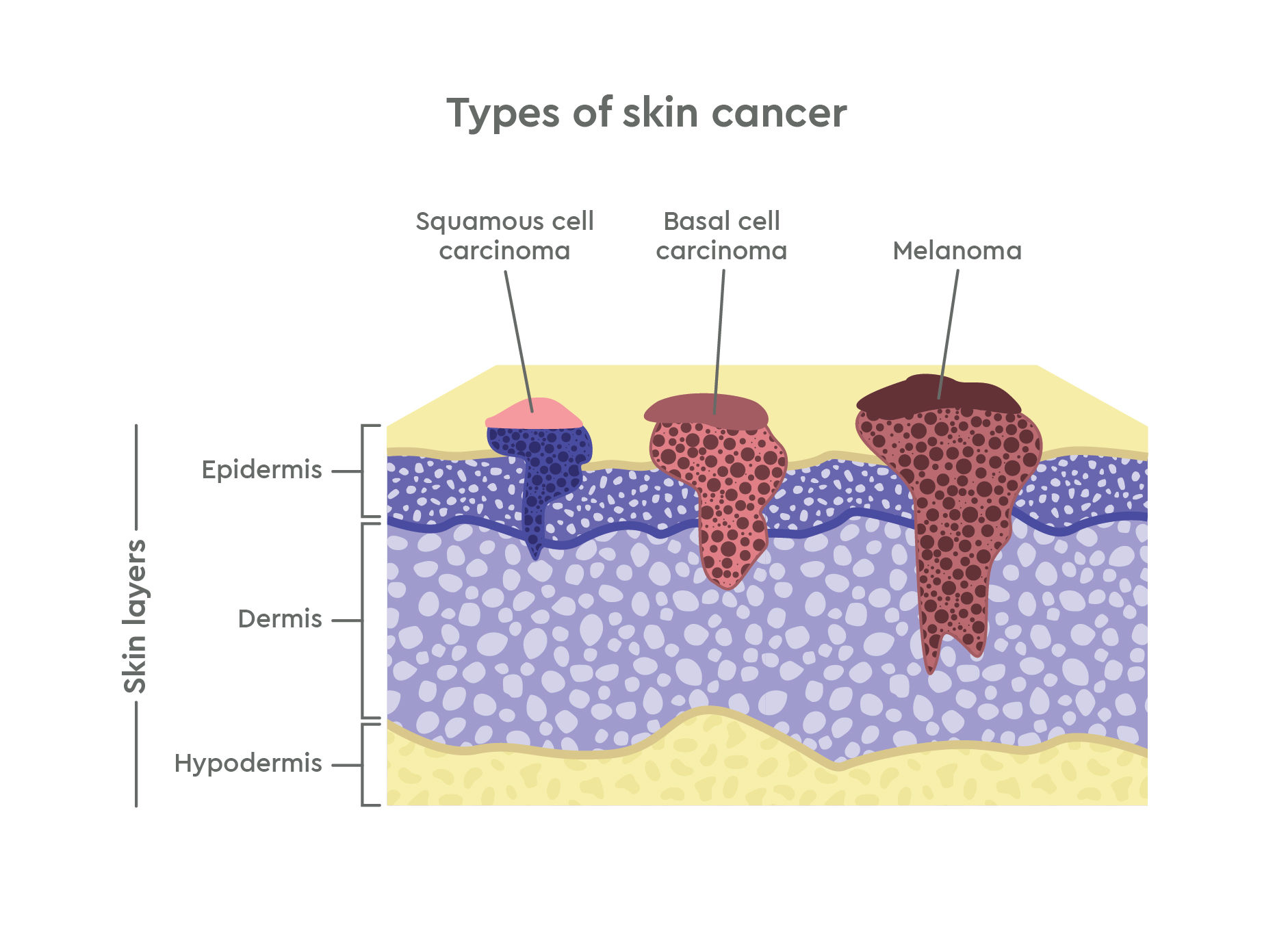
The most common type of melanoma is superficial spreading melanoma, which starts by spreading across the top layer of the skin. Over time, it begins to grow deeper into the skin. Other types include, nodular, lentigo maligna, acral lentiginous, and amelanotic melanoma.
When caught early, melanoma can be easier to treat, and patients may have better outcomes
The first sign of melanoma cancer is often a new spot on the skin, or change in size, shape or color of an existing mole. You may find that the spot is also bleeding, painful, inflamed or itchy.
A good way to remember the warning signs for melanoma is the A-B-C-D-E method:

- A is for asymmetrical – is the mole or spot irregularly shaped?
- B is for border – is the border jagged?
- C is for color – is the color uneven?
- D is for diameter – is it larger than the size of a pea?
- E is for evolving – has it changed during the past few weeks?
Having one or more of these skin cancer symptoms doesn’t mean you have cancer, as they may be caused by other, benign (non-cancerous) conditions. It’s best to speak to your primary care physician for advice if you have any concerns.
Request more information
Contact us today to find out how SunState Medical Specialists can help you.
Chapter 2
Diagnostics
The first sign of melanoma cancer is often a new spot on the skin, or change in size, shape or color of an existing mole. You may find that the spot is also bleeding, painful, inflamed or itchy. Your physician may want to run diagnostics if there is a concern for malignancy.
Melanoma is usually diagnosed by performing a biopsy. Occasionally a biopsy can remove all the cancer tissue and no treatment is required. If necessary, imaging scans such as ultrasound, PET, CT, and MRI may be used to confirm the extent of a diagnosis. You may also have advanced diagnostic tests throughout treatment to assess effectiveness and how your cancer is responding.

Chapter 3
Treatment focused on you
Chapter 4
Surgery
Chapter 5
Radiation therapy
Radiation therapy is often most appropriate for melanoma where surgery is contraindicated in earlier stages, or as an additional treatment for advanced disease to help minimize spread of cancer after surgery is performed.
At SunState Medical Specialists, we specialize in advanced radiation therapy techniques that are designed to be effective and minimize the side effects you’ll experience. As a leader in cancer care and other challenging conditions, our broad experience and world-class expertise means we offer advanced and innovative radiation therapy as standard.
Our latest-generation machines are built to deliver highly targeted radiation beams. The accuracy of these treatments, together with the expertise of our teams, means that we can often complete a course of radiation therapy in a shorter amount of time - so you can spend more time doing the things you love.
Radiation therapy for skin cancer
External Beam Radiation Therapy (EBRT)
At SunState Medical Specialists our melanoma treatments consist of External Beam Radiation Therapy (EBRT) techniques, where radiation is delivered from outside the body.
Stereotactic Radiation Therapy (SBRT)
SBRT, also known as Stereotactic Ablative Radiation Therapy (SABR), delivers a precise beam of radiation to a tumor, while providing minimal damage to the surrounding healthy tissue. Treatment is typically shorter than the average radiation plan, often offered over three to five sessions. It is most frequently used in more advanced cases of melanoma that has metastasized.
Intensity-Modulated Radiation Therapy (IMRT)
IMRT is an advanced external beam radiation therapy technique where the beams of radiation are precisely shaped to exactly match your tumor, which limits radiation exposure to healthy tissues.
Volumetric Modulated Arc Therapy (VMAT)
VMAT is an advanced form of IMRT that directs beams of radiation in an arc across the treatment area. VMAT very accurately target areas of cancer and can be used to give a consistent dose to large treatment areas, while limiting radiation exposure to surrounding areas of the body.

Chapter 6
Medical oncology
Chapter 7
Find a specialist in our network
Connect with a physician who specializes in your condition and can help guide your path to better health. SunState Medical Specialists physicians are based in Florida and currently accepting new patients. Find a physician near you and take the next step toward care.