
Skin cancer treatment and diagnosis
Skin Cancer
It is the growth of abnormal cells at an uncontrolled rate in the epidermis, or the outer skin layer.

Chapter 1
What is skin cancer?
Risk factors
Lack of sun protection is one of the largest risk factors of developing skin cancer. Getting sunburned even once, by the sun or a tanning bed, is a sign of cellular skin damage. Each sunburn you get increases your risk of developing skin cancer.
Other factors may heighten your risk of developing skin cancer, include:
- Personal or family history
- Age (you are older)
- Fair skin, blonde or red hair, or blue or green eyes
- A reduced immune system, Chron’s disease, ulcerative colitis or sarcoidosis
- Having a higher number of moles
- Having received an organ transplant
- Having a rare type of birthmark called giant congenital melanocytic naevus
Types of skin cancer
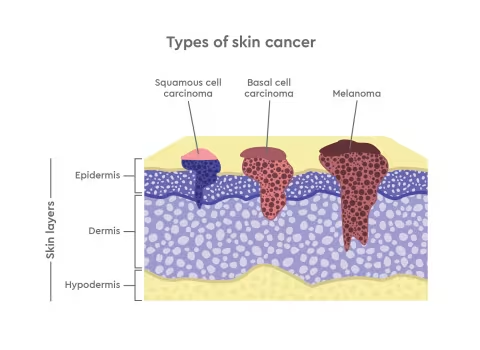
There are two primary types of skin cancer: non-melanoma skin cancer (which includes basal cell carcinoma and squamous cell carcinoma) and melanoma.
Learn more about specific risk factors, signs and symptoms, and treatment options below.
NMSC
NMSCs are the most common diagnosed cancers. They develop in the upper layers of the skin. Despite their high occurrence rate, almost all can be treated successfully.
Melanoma
Melanoma accounts for 1% of all skin cancers. It develops from melanocytes, which are cells that produce melanin and gives your skin color (or pigment).
Chapter 2
Diagnosis
If you have been experiencing any skin changes associated with NMSC symptoms or melanoma symptoms, such as a change in the size or shape of a mole, changes in the skin appearance or feel, or wounds that do not heal, your dermatologist may want to perform a biopsy.
Occasionally, a biopsy can remove all the cancer tissue and no further treatment is required. If necessary, imaging tests, such as an ultrasound, PET, CT and/or MRI may be used to confirm the extent of your diagnosis.
Chapter 3
Treatment options
At SunState Medical Specialists, we offer the latest treatments for skin cancers, including surgery, chemotherapy, immunotherapy and advanced radiation therapies.
We know from our experience that high-quality care means treating you as a person and not just your cancer. Our expert team will treat your disease in the best way possible, while offering as much personal support as you need.
Learn more about treatment options for non-melanoma skin cancer and melanoma.
Chapter 4
Patient experience
Managing Grace’s non-melanoma skin cancer
Grace was diagnosed with basal cell carcinoma on her nose and went through several dermatologic surgery procedures. Eventually, it was determined that she would need a much more invasive surgery or radiation therapy to fight the cancer.
After much consideration, Grace determined radiation was best for her. Hear her story to hear how she responded to radiation at SunState Medical Specialists, and her recommendation for others fighting skin cancer
Chapter 5
Treatment for non-cancerous skin conditions
At SunState Medical Specialists, we also offer treatment for select benign, or non-cancerous, skin conditions, such as keloid scars.
Keloids are scars in which the scar-forming tissue has overgrown. They are typically lumpy and raised, and while they are often painless, they may be tender or itchy.
Keloids have a high recurrence rate following surgery, and therefore, radiation therapy following surgery may be an appropriate option.
Chapter 6
Find a specialist in our network
Connect with a physician who specializes in your condition and can help guide your path to better health. SunState Medical Specialists physicians are based in Florida and currently accepting new patients. Find a physician near you and take the next step toward care.