


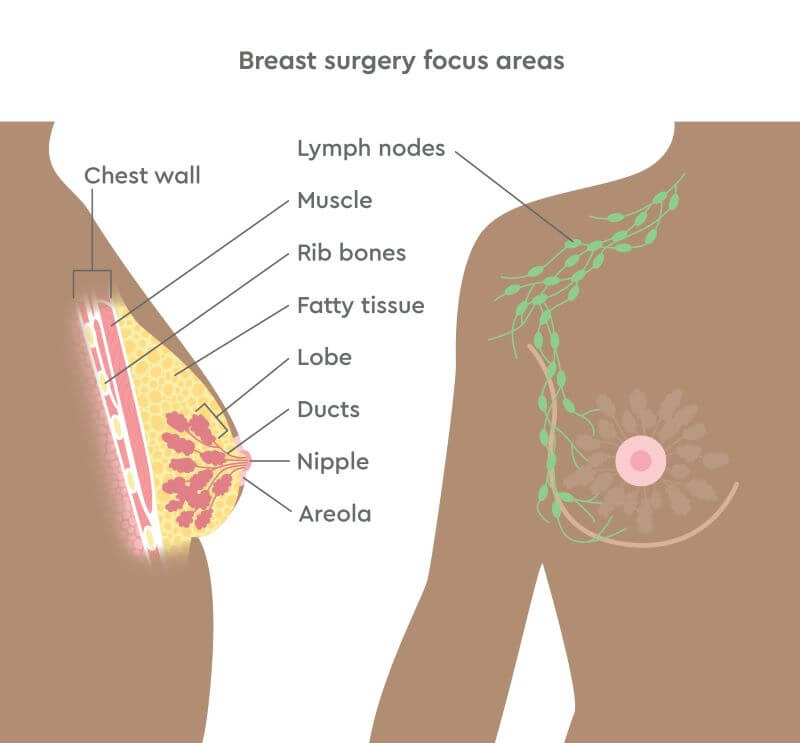
At SunState Medical Specialists, our breast surgeons specialize in the diagnosis, treatment, and surgical management of both cancerous and benign breast conditions affecting the areas shown in the diagram above.
Our highly experienced team is committed to delivering the highest standard of surgical breast care, using the latest surgical techniques and diagnostic tools. We focus not only on effective treatment but also on supporting each patient through the physical and emotional challenges of breast-related conditions. From diagnosis to surgery and ongoing care, we’re with you every step of the way.

Lumpectomy
Removes the tumor and a margin (a small rim of normal breast tissue around the tumor). The breast remains intact. This is also called breast-conserving surgery.
For small tumors, limited breast surgery has been shown to have similar outcomes to mastectomy when additional treatments such as radiation therapy are added.

A mastectomy is a more extensive surgery that involves the removal of the entire breast tissue, including the skin, and sometimes the nipple and areola. This type of surgery is often recommended when the tumor is large relative to the breast size or if there are multiple tumors within the breast.
Breast reconstruction can sometimes be performed at the same time as the mastectomy to restore the shape of the breast. Reconstruction can use implants or tissue from other areas of the body, depending on the patient's preference and health.

The sentinel lymph node biopsy is a procedure used to determine whether cancer has spread to the lymph nodes. The sentinel nodes are the first few lymph nodes that drain lymph fluid from the breast. During this procedure, a special dye or radioactive tracer is injected near the tumor to help the surgeon identify these nodes.
If cancer is present in these lymph nodes, additional lymph node removal may be necessary. This helps determine the stage of the cancer and guides treatment decisions.
If cancer is found in the sentinel lymph nodes, more lymph nodes may need to be removed through an axillary lymph node dissection. This procedure involves the removal of additional lymph nodes from the underarm area to evaluate the extent of cancer spread.
ALND is typically performed when cancer has spread beyond the sentinel nodes. Following an ALND, patients are often advised on ways to manage and prevent lymphedema, a condition where fluid builds up in the arm, leading to swelling.

SLYMPHA
SLYMPHA is a cutting-edge, risk-reducing procedure designed to prevent lymphedema.
This advanced method has shown significant success in clinical settings, offering hope and improved quality of life for patients at risk.

Oncoplastic surgery combines traditional breast cancer surgery with cosmetic techniques to improve the aesthetic outcomes of surgery. This approach is especially helpful for patients with larger tumors, as it allows for the removal of the cancerous tissue while also reshaping the breast to achieve a more natural appearance.
Oncoplastic surgery can be an option for patients undergoing a lumpectomy or a mastectomy, depending on the extent of the surgery required.

Hidden Scar Technique
The Hidden Scar Technique is an innovative approach to breast cancer surgery that equalizes the oncologic and aesthetic priorities, aiming to remove the cancer and leave little to no visible scar.
Our skilled surgeons strategically remove cancerous tissue through incisions that are placed in areas that are hidden, ensuring that you can confidently embrace life after surgery.