

Causes, Symptoms, Treatments and Prevention
Kidney Stones
Kidney stones are a fairly common health condition that can affect just about anyone. They can cause severe pain – especially in the side and back.

Chapter 1
What are kidney stones?
Kidney stones are hard deposits of minerals and salts that accumulate inside your body. There are multiple types of kidney stones.
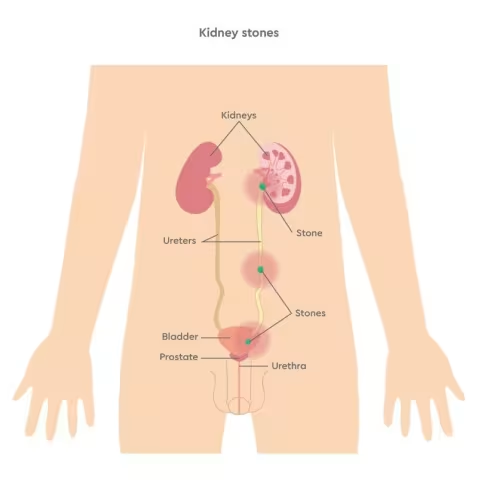
This is the most common type of kidney stone – and these typically occur in the form of calcium oxalate. Oxalate is a substance that your liver makes or that you absorb by eating certain foods, including nuts, chocolate and certain fruits and vegetables.
The following factors can cause high levels of oxalate and calcium in your body:
- Having a metabolic syndrome
- Having high levels of vitamin D
- Having undergone intestinal bypass surgery
If you have an inherited (passed down in families) condition called cystinuria, your body can develop this type of kidney stone.
If you have or have recently had a urinary tract infection (UTI), your body may develop struvite stones. They can grow quickly and sometimes have no symptoms.
This type occurs in people who don’t have enough fluid in their body. Factors that can cause low fluid levels include:
- Eating a high-protein diet
- Having a malabsorption disorder
- Having a metabolic syndrome
- Having chronic diarrhea
- Having diabetes
Chapter 2
What do kidney stones look like?
Most people won’t even see a kidney stone when they pass it. They look like very small brown or yellow crystals.
Chapter 3
What causes kidney stones?
The following factors can cause kidney stones:
- Being overweight or obese
- Eating a diet high in salt and/or sugar
- Not drinking enough water
- Having certain medical conditions, such as Crohn’s disease, Diabetes, Gout, Inflammatory bowel disorder (IBD)
- Taking certain supplements and medications, such as Antibiotics, Diuretics (water pills), Laxatives, Protease inhibitors (used to treat human immunodeficiency virus or HIV), Vitamin C
Chapter 4
What are the symptoms of kidney stones?
Most people won’t even see a kidney stone when they pass it. They look like very small brown or yellow crystals. Signs and symptoms of kidney stones may include:
- Fever and chills
- Frequent urge to urinate
- Nausea
- Severe, sharp pain in your side or back – below your ribs
- Pain or burning while urinating
- Pain that comes and goes and changes from dull to sharp
- Pain that spreads to your lower abdomen and groin
- Urine that is brown, red or pink
- Urine that is cloudy or foul-smelling
- Vomiting
Chapter 5
How are kidney stones diagnosed?
Your doctor will use one or more of the following tests to diagnose kidney stones:
- Blood tests. In this test, your doctor sends a sample of your blood to the laboratory for close analysis. Lab technicians analyze your blood to check for high levels of calcium or uric acid, which could indicate problems with your kidneys.
- Imaging tests. Your doctor may order imaging tests – such as a computed tomography (CT) scan or X-ray – to look for kidney stones or other problems that could be causing your symptoms.
- Urine test. In this test, your doctor sends a sample of your urine to the laboratory for close analysis. Lab technicians analyze your urine to check for unusually high levels of minerals or other substances that can lead to kidney stones.
- Ureteroscopy. Your urologist inserts a flexible scope (thin tube) into your urethra (hole through which urine exits your body) and into your bladder and ureter (tube that connects each kidney to the bladder). Your urologist then uses a specialized viewing monitor to look for stones. They may be able to remove the stones during the same procedure.
Chapter 6
How to treat kidney stones
Depending on the location and size of your kidney stones, your overall health and your personal preferences, your doctor may recommend one of the following treatment options for kidney stones:
Extracorporeal shock wave lithotripsy (ESWL)
If your kidney stones are large or are causing you severe pain, your urologist may recommend you undergo ESWL. During this treatment, your urologist uses sound waves to break up the stones into tiny pieces that you can then pass through your urine.
Percutaneous nephrolithotomy (PCNL)
If your kidney stones are large and other treatment options like ESWL aren’t an option for you, your urologist may recommend PCNL to remove the stones. During this procedure, your urologist makes a small incision (cut) in your lower back and removes the stones from your kidney.
Ureteroscopy
Your doctor may use a specialized camera to locate the stone and either break it up using a laser or remove it with a basket.
Watchful waiting
If your kidney stones are small and not causing you severe symptoms, your urologist will likely recommend watchful waiting with ongoing monitoring.
During this time, your body will try to pass the kidney stone. You should drink as much water as you can – ideally up to 3 quarts each day. You may need to take over-the-counter pain medication – such as ibuprofen or aspirin – if you’re having mild pain.
If the stone or stones do not pass on their own, your urologist may recommend trying a different treatment option.
Chapter 7
How to prevent kidney stones
Here are some ways you can help reduce your risk of developing kidney stones:

Drink enough fluids
Especially water each day

Limit alcohol intake
to reduce your risk

Eat a healthy diet
with plenty of vegetables, fruits and whole grains

Limit oxalate-rich foods
if you’re high risk for kidney stones
Chapter 8
Is it covered by insurance?
Diagnosis and treatment of kidney stones should be covered by insurance plans. Contact your specific carrier to be sure you know what’s covered.
Chapter 9
Find a specialist in our network
Connect with a physician who specializes in your condition and can help guide your path to better health. Our physicians are based in Florida and currently accepting new patients. Find a physician near you and take the next step toward care.