

Thyroid nodules treatment and diagnosis
Thyroid nodules
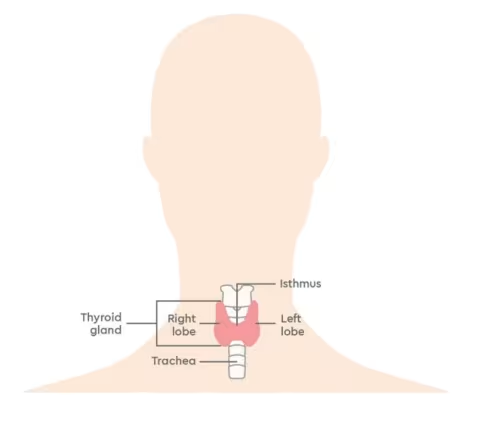
Thyroid nodules are small, solid, or fluid-filled lumps found in your thyroid, the butterfly-shaped gland in your neck. While most thyroid nodules are benign (noncancerous), roughly five to 15% of them can be cancerous.

Chapter 1
What is a thyroid nodule
Your thyroid is located in your neck, underneath your Adam’s apple. Its main purpose is to produce the hormone thyroxine, which helps stabilize your metabolism, heart and muscle function, brain development and bone strength.
A thyroid nodule, also known as a thyroid adenoma, is when there is a small lump or mass found on the thyroid. There are a few different kinds of thyroid nodules including:
- Goiters. A goiter occurs when the thyroid is swollen or enlarged, and it is the most common thyroid disorder.
- Multinodular goiters. This is when there are multiple lumps found on the thyroid.
- Toxic adenomas. These types of nodules release excess thyroid hormone and cause hyperthyroidism.
- Thyroid cysts. When the nodule is full of fluid, such as blood, it is called a cyst. Cysts can be present at birth or be caused by an injury or inflammation.
- Thyroid cancer. While not as common, five to 15 percent of thyroid nodules are malignant, or cancerous.
Causes of thyroid nodules
Thyroid nodules can be caused by a variety of factors including:
- Tissue overgrowth. While the cause is not certain, sometimes the thyroid tissue can overgrow and cause a nodule. This tissue overgrowth is sometimes referred to as a colloid nodule.
- Cysts. Sometimes, fluid-filled sacs can occur if a nodule deteriorates. Occasionally, there can be solid components within the fluid, such as excess calcium deposits.
- Chronic inflammation. If you have chronic inflammation in your thyroid, or Hashimoto’s disease, you could develop a nodule. Often, nodules caused by inflammation are part fluid-filled and part solid.
- Goiters. A goiter is when the thyroid is swollen or enlarged and can also cause a mass or a lump on the thyroid.
- Having an iodine deficiency. Iodine is necessary to help your body produce thyroid hormone. When you don’t ingest enough iodine, your thyroid may develop nodules.
- Thyroid cancer. In rare instances, a nodule can be caused by cancer, or an uncontrolled growth of cells in the thyroid.
Risk factors for thyroid nodules
While anyone can be diagnosed with thyroid nodules, the following factors may increase your risk if you:
- Are older
- Are female
- Have a family history of thyroid nodules or cancer
- Have a visible goiter, or enlarged thyroid
- Have problems breathing or swallowing
- Have a hoarse voice
- Have a history of radiation to the head or neck
- Have an iron deficiency
- Are a smoker
- Consumer large amounts of alcohol
- Are overweight
- Have uterine fibroids
- Have high levels of the hormone growth factor-1
Having a risk factor for thyroid nodules doesn’t mean that you will get it, but it makes you more likely than someone without the risk factor. Talk to your doctor about your individual risk factors.

Symptoms of thyroid nodules
In many instances, a thyroid nodule is so small, it does not cause any symptoms. When this is the case, the nodule is typically found accidentally in a routine medical exam or imaging test for another issue.
When a nodule does cause symptoms, they may include:
- Difficulty swallowing or breathing
- Having a horse or scratchy voice
- Symptoms of hyperthyroidism, which can include:
- Sudden and/or unexplained weight loss
- Increased appetite
- Irregular and/or fast heartbeat
- Excessive sweating, anxiety, or nervousness
- A general feeling of weakness or fatigue
- Oversensitivity to hot temperatures
- Changes in bowel function including diarrhea or increased bowel movements
- Shaking or tremors
- Sleep difficulties
- Sudden mood swings
- Vision changes or eyes bulging
- Changes in the menstrual cycle (periods)
- Swelling in the neck due to a goiter
- Skin texture that feels thin, warm and/or moist
- Brittle hair that falls out easily
- Symptoms of hypothyroidism, which may include:
- Constantly feeling cold
- Fatigue
- Dry skin
- Difficulty with memory
- Changes in bowel movements including constipation
- Depression
Keep in mind, the above symptoms can be related to a variety of medical conditions. It is important to talk to your doctor to determine the root cause of your symptoms.
Chapter 2
Diagnosis
Most often, a thyroid nodule is found during a routine physical examination. Unless it is obstructing your swallowing and breathing or is visible to the naked eye, your healthcare provider will typically notice it when examining your neck or may catch it during imaging tests ordered for other conditions.
If your healthcare provider is concerned about the possibility of a thyroid nodule, he or she may order some combination of the following tests:
- Blood tests. Your provider may order blood tests to measure your thyroid function. This will help your provider determine if your thyroid is producing too much or too little thyroid hormone. Additionally, the blood tests may also be used to study your antibody levels to determine if your immune system is overactive.
- Imaging tests. Your doctor may order imaging tests – such as an ultrasound – to get a closer look inside your body and see how large the nodule is.
- Thyroid scan. You will receive a safe, radioactive substance injected intravenously before you have a computerized tomography (CT) scan. The substance attaches itself to the nodule to help identify it in the imaging study.
- Biopsy. During a biopsy, your provider will remove a small sample of the tissue or cells from the goiter through a thin needle. The sample will then be sent to a laboratory for a pathologist to study it and determine if there is cancer present or not.
Chapter 3
Treatment options for thyroid nodules
The type of treatment you receive will be dependent upon your individual case and the root cause of your thyroid nodule. In some instances, if the nodule is not severe, your provider may recommend a ‘watch-and-wait’ approach.
If treatment is necessary, your provider may recommend one of the below treatment options or a combination of treatments including:
- Medications. Some medication can help your thyroid levels return to a normal level if the nodule was caused by an overactive or underactive thyroid.
- Radioactive iodine treatment. With this treatment option, a dose of radioactive iodine is taken orally, which once in the body, targets the cells in the thyroid. Because the treatment can drastically lower the thyroid hormone production, long-term thyroid hormone replacement medication is typically needed afterwards.
- Surgery. Surgery may include a partial thyroidectomy, which removes a part of the thyroid, or a total thyroidectomy, to remove the full thyroid. Typically, a hormone replacement medication is needed after either procedure.
Is it covered by insurance?
Coverage varies by insurance carrier and plan. Contact your insurance carrier to learn more about your coverage specifics.
Chapter 4
Meet our expert physician
Head & Neck Surgical Cancer Specialists of SW Florida
Surgical Oncology
4571 Colonial Blvd., Suite 210
Fort Myers, FL 33966
Tel: 239-790-3480
Our provider Scott Larson, MD, Otolaryngologist at Head & Neck Surgical Cancer Specialists of SW Florida, specializes in the surgical management of benign and malignant tumors of the skin, salivary glands, nose/sinuses, oral cavity, pharynx, larynx, thyroid and parathyroid glands. He is experienced in thyroid surgery.

Chapter 5